TripBuddies

Travel

Exploring adaptive intelligence in group travel planning


ROLE: UX and Product Design, UX Research, Interaction Design

METHODS: Market & trend analysis, Competitive benchmarking, Quantitative survey research, Qualitative interviews, Persona development, Journey mapping, Opportunity framing, Innovation ecosystem mapping, Value proposition design, Wireframing, Usability testing, Iterative design

TOOLS: Figma, FigJam, Google Forms, Keynote, Balsamiq, Zoom

TEAM: Solo


Business challenge

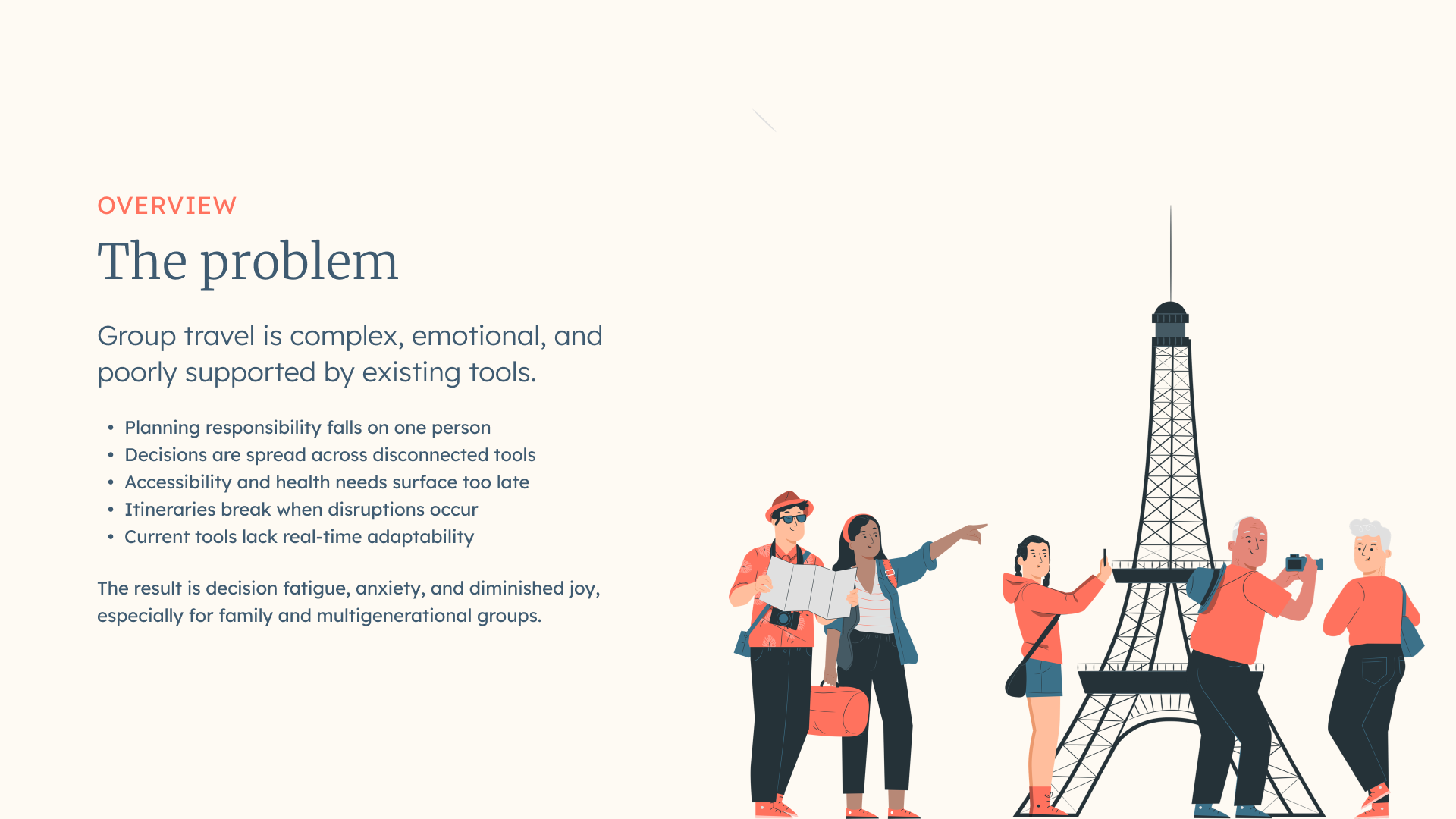
After a layoff and the loss of my mom, I traveled with my elderly dad and experienced firsthand how fragmented tools, constant coordination, and last-minute disruptions can turn travel into a source of stress rather than connection. This personal catalyst revealed a broader market gap: while group and multigenerational travel is growing, most planning tools still treat travel as an individual activity and lack real-time adaptability. To validate the opportunity, I conducted foundational research including market and trend analysis, competitive benchmarking, and a quantitative survey of a broader travel community. The research confirmed clear unmet needs around coordinating group decisions, supporting accessibility and health considerations, responding to disruptions, and reducing reliance on disconnected tools. The challenge was to design a smarter, adaptive system that reduces cognitive and emotional burden and enables travelers to focus on meaningful experiences rather than logistics.

My role & leadership

I led this project end-to-end as a solo UX and Product Designer. I was responsible for framing the problem, defining the research strategy, synthesizing insights, and translating findings into a viable product concept. I also shaped the business narrative and incorporated feedback from faculty and industry mentors to refine the solution for pilot readiness.

Research goals

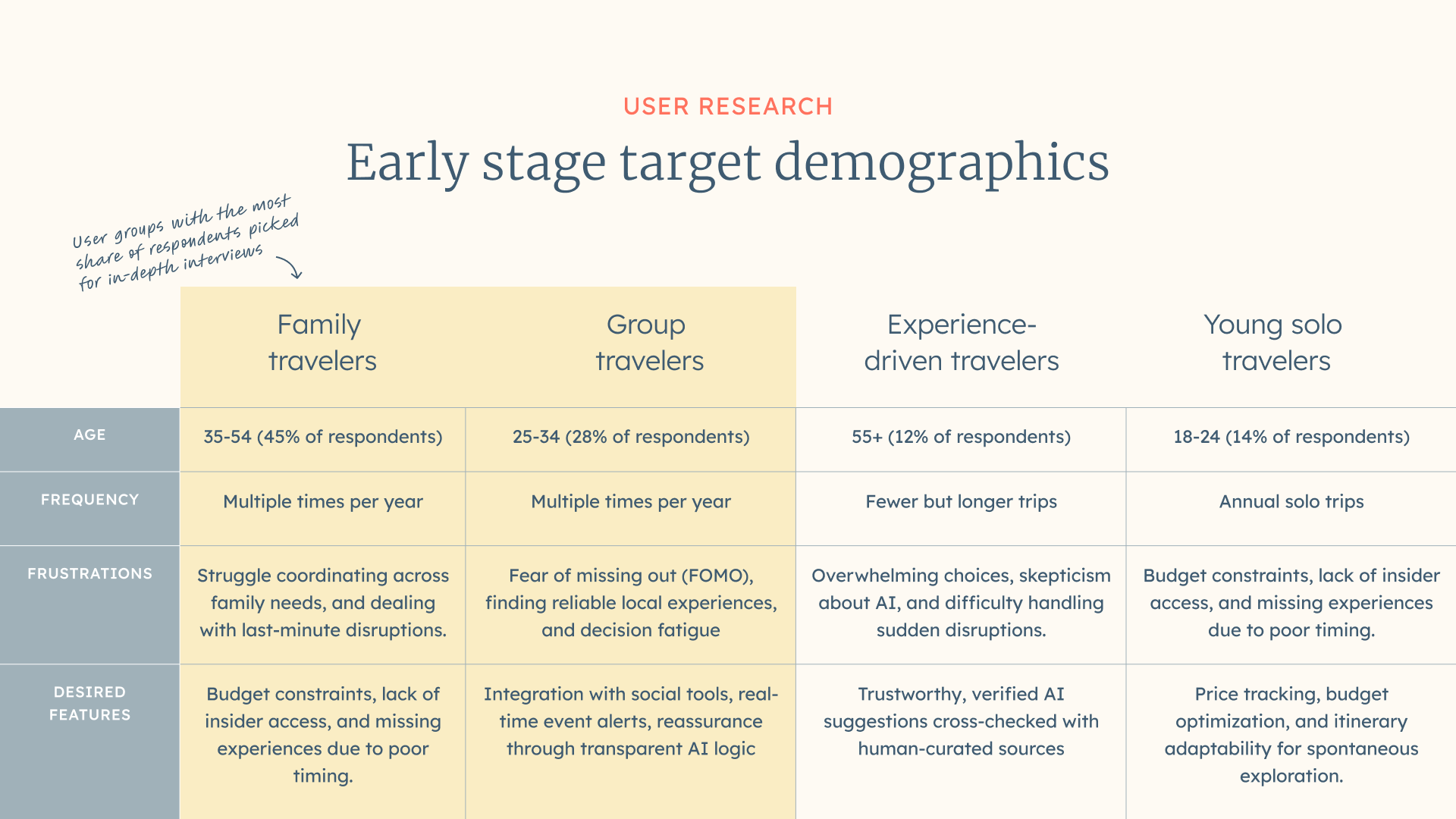
The research aimed to understand the emotional, functional, and logistical realities of group travel—especially for multigenerational families and caregivers. The focus was on uncovering unmet needs, validating core user roles, and assessing where adaptive intelligence could reduce stress and improve confidence. Key goals included:

  • Identifying pain points across planning and on-trip phases
  • Understanding accessibility challenges
  • Evaluating openness to AI-supported collaboration

Research methods

A mixed-methods approach balanced qualitative depth with quantitative validation. This allowed insights to be triangulated and confidently translated into design decisions. Methods included:

  • Market and trend analysis
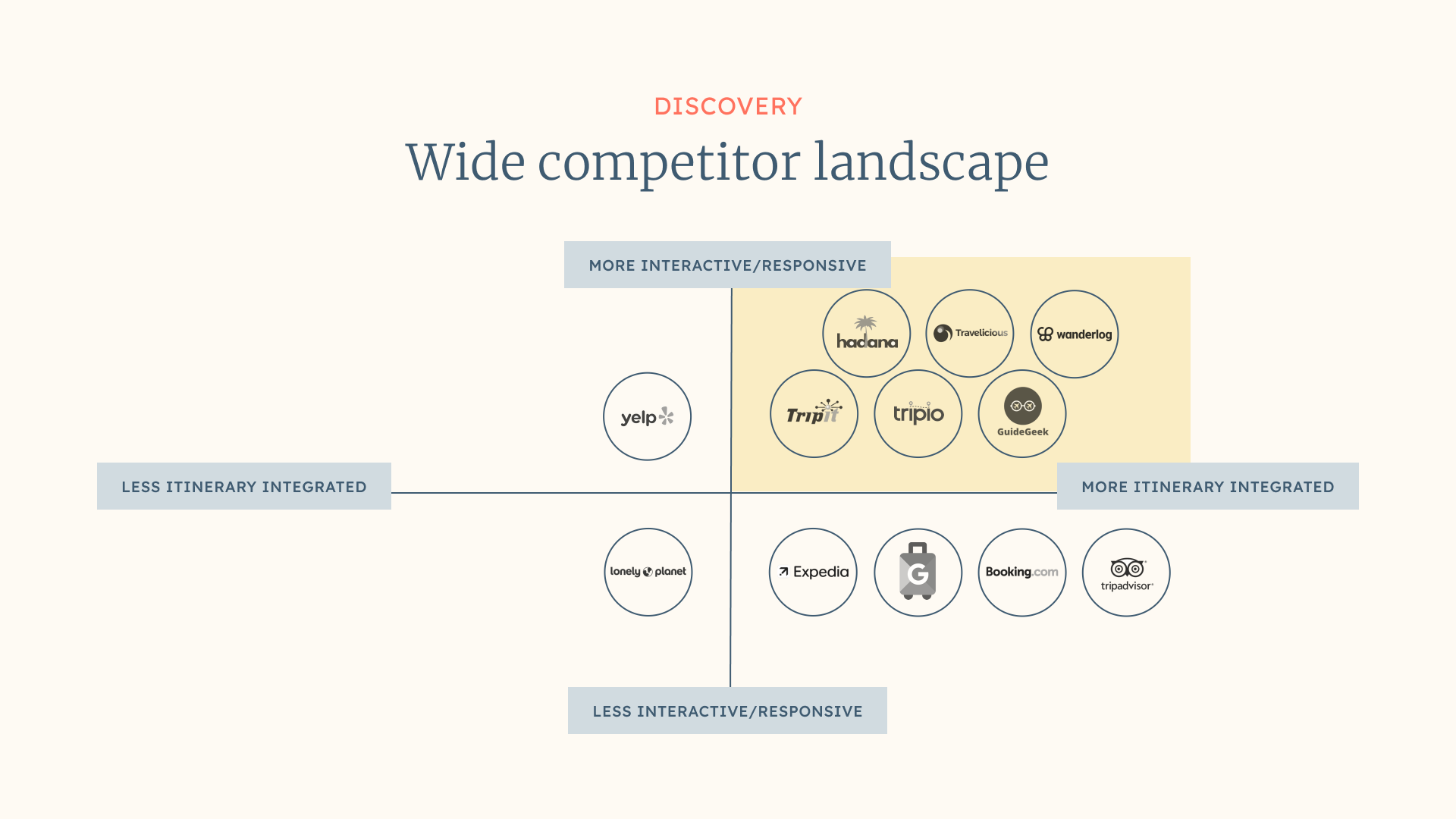
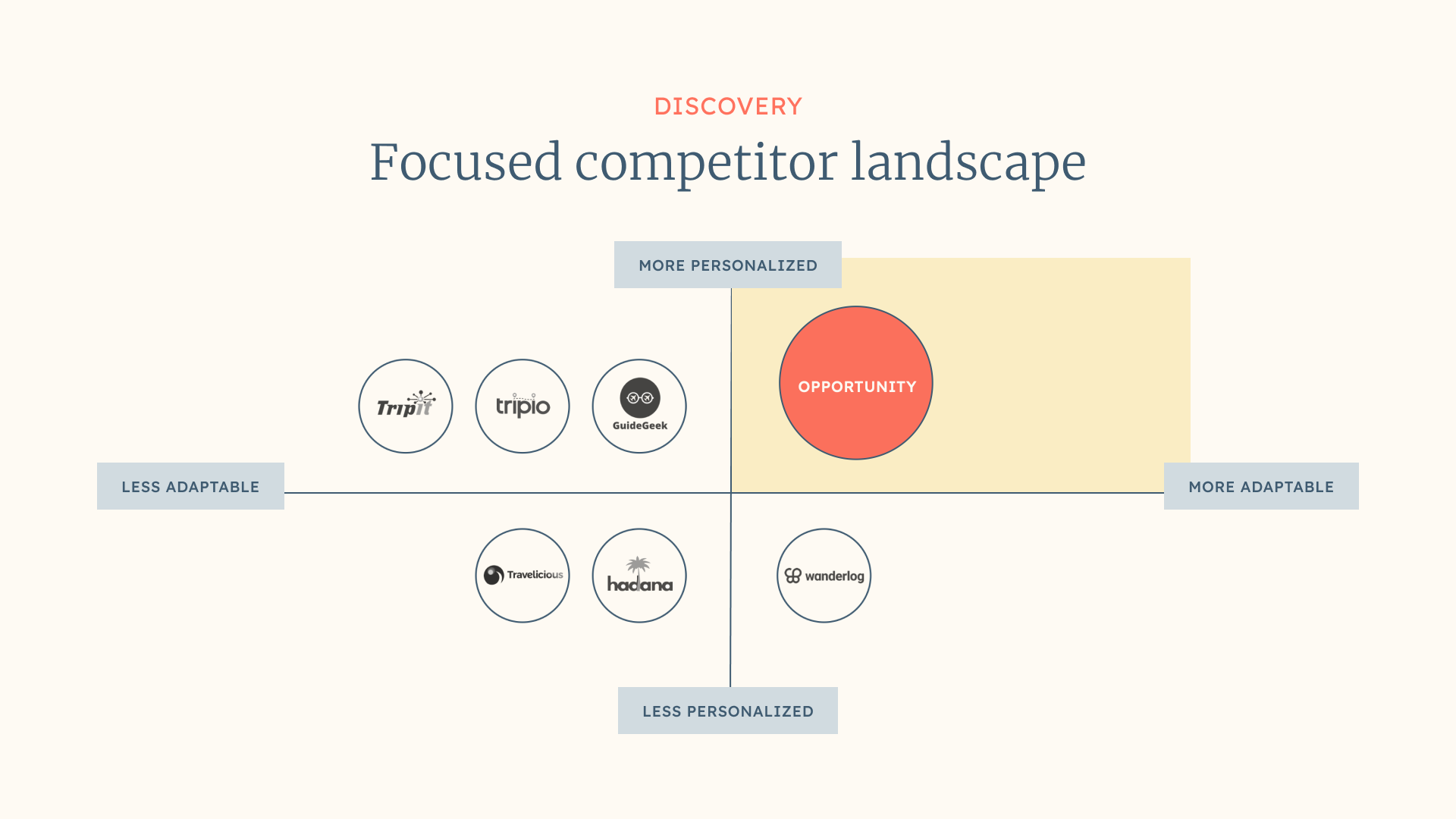
  • Competitive landscape mapping
  • Quantitative survey
  • Semi-structured interviews
  • Usability testing of wireframes and high-fidelity prototypes
  • Ecosystem mapping

Key research findings

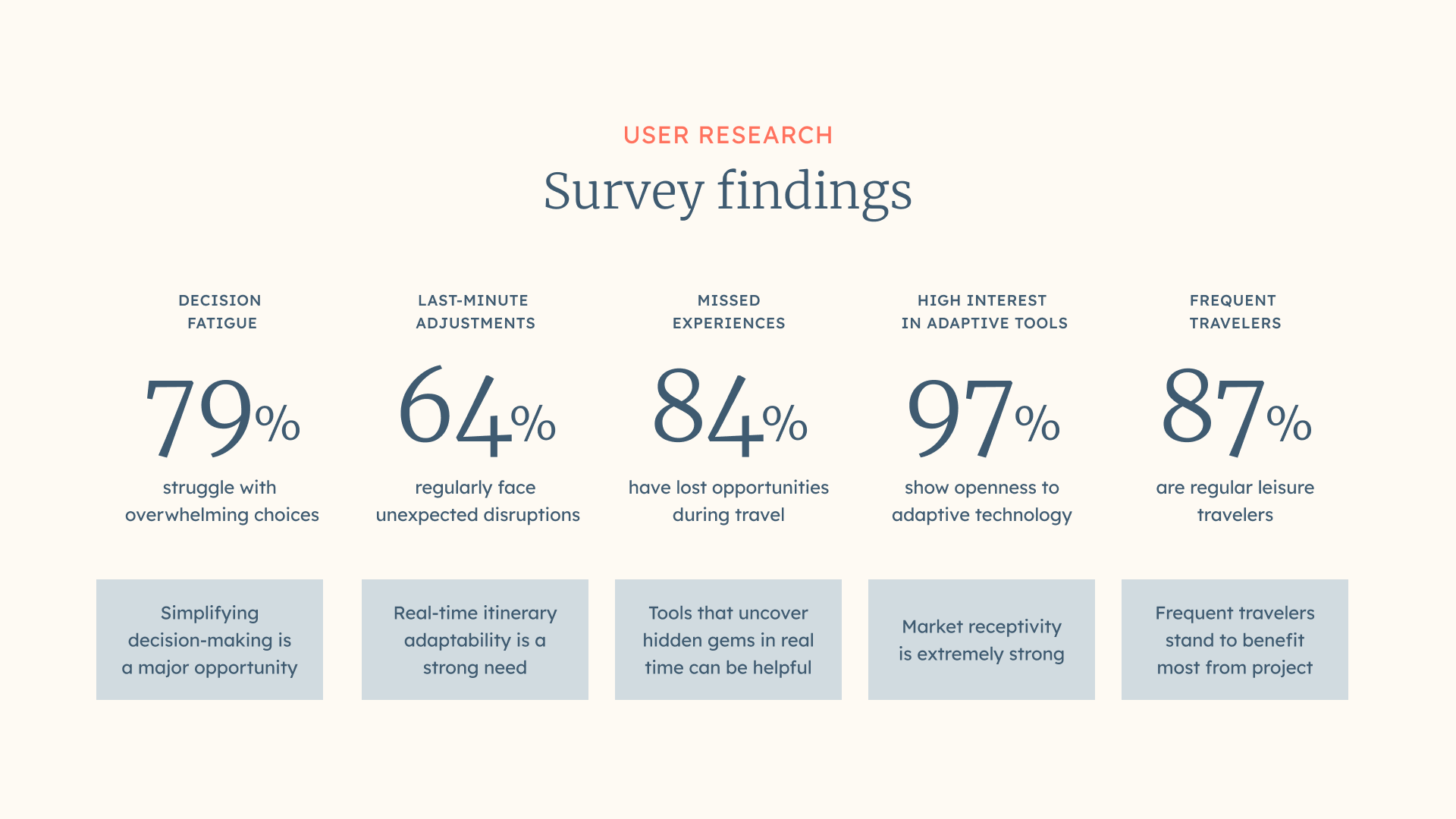
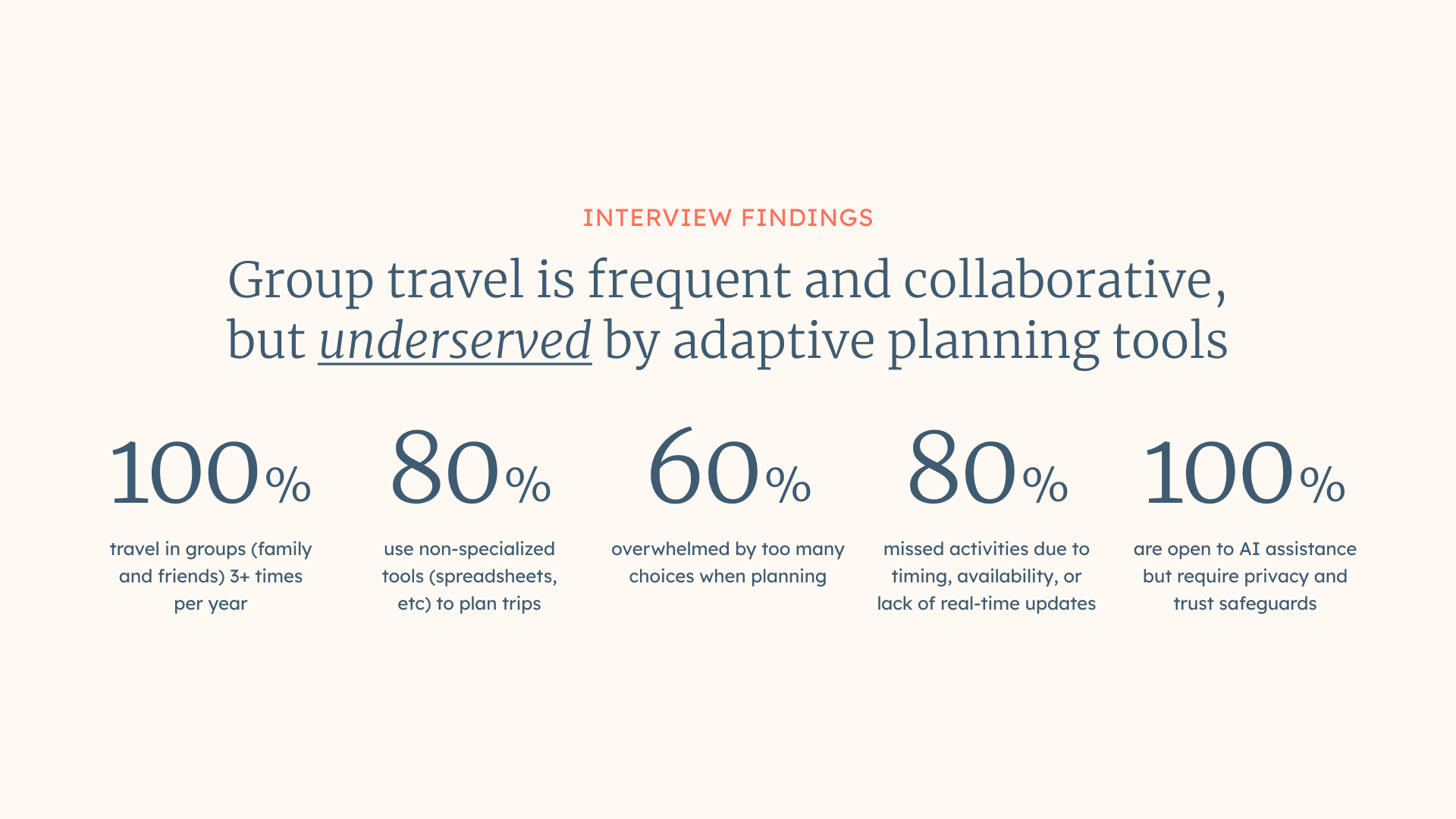
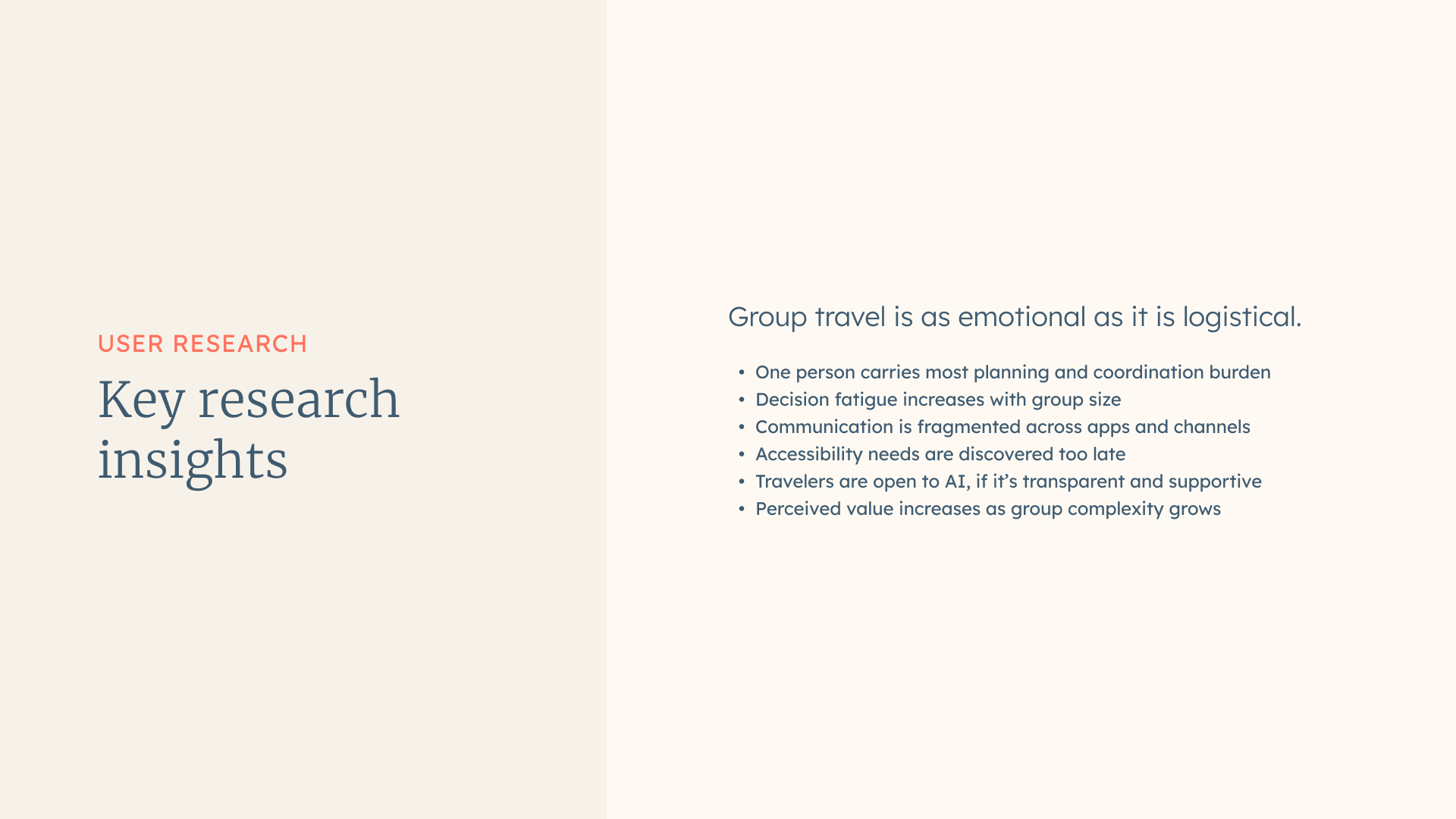
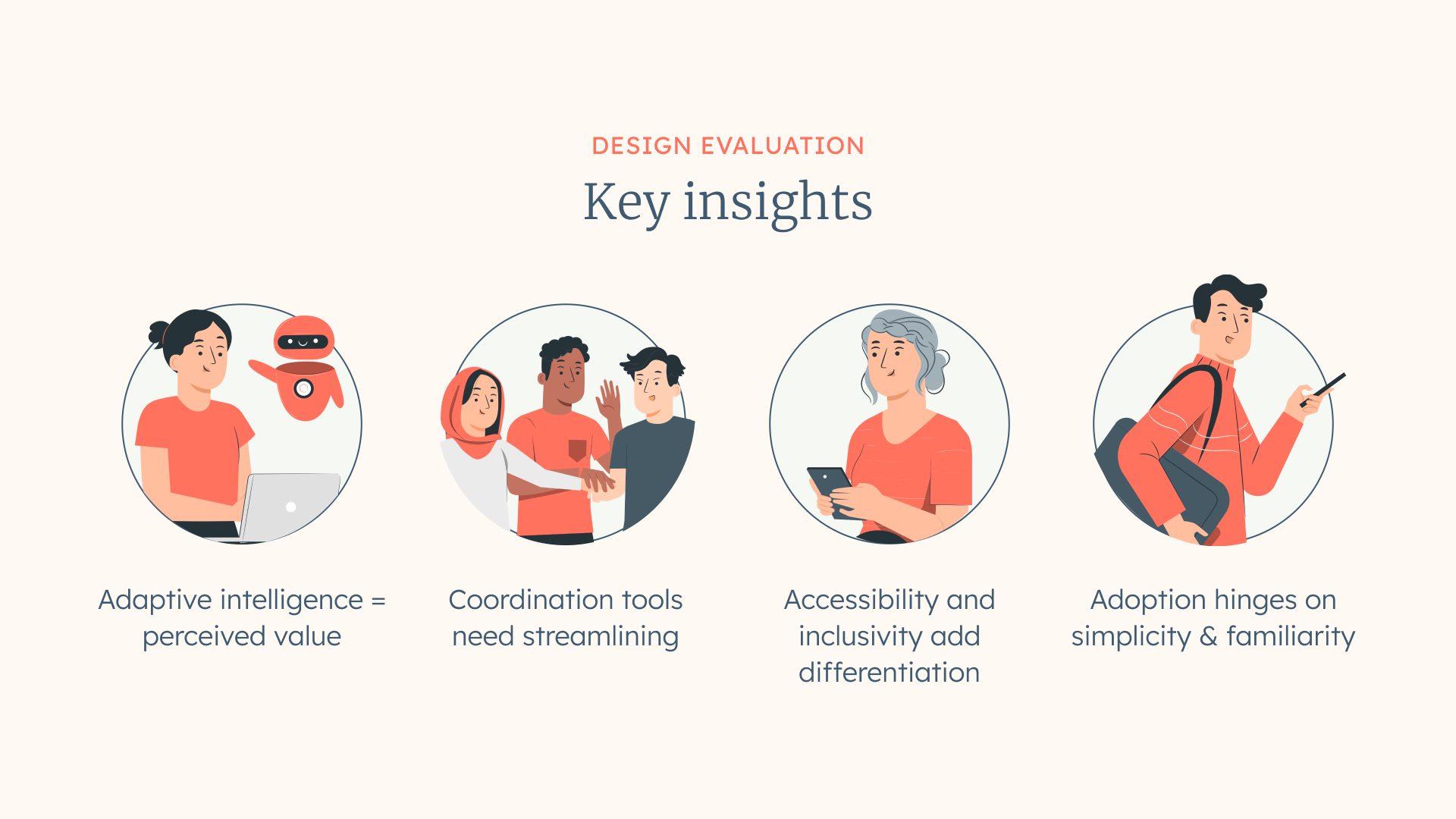
Research consistently showed that group travel is as emotional as it is logistical. The burden of coordination typically falls on one person, and existing tools fail to adapt when conditions change or accessibility needs surface. Key findings included:

  • High decision fatigue
  • Fragmented communication across tools
  • Late discovery of accessibility issues
  • Strong interest in transparent AI assistance
  • increased perceived value as group size grows

Opportunity areas

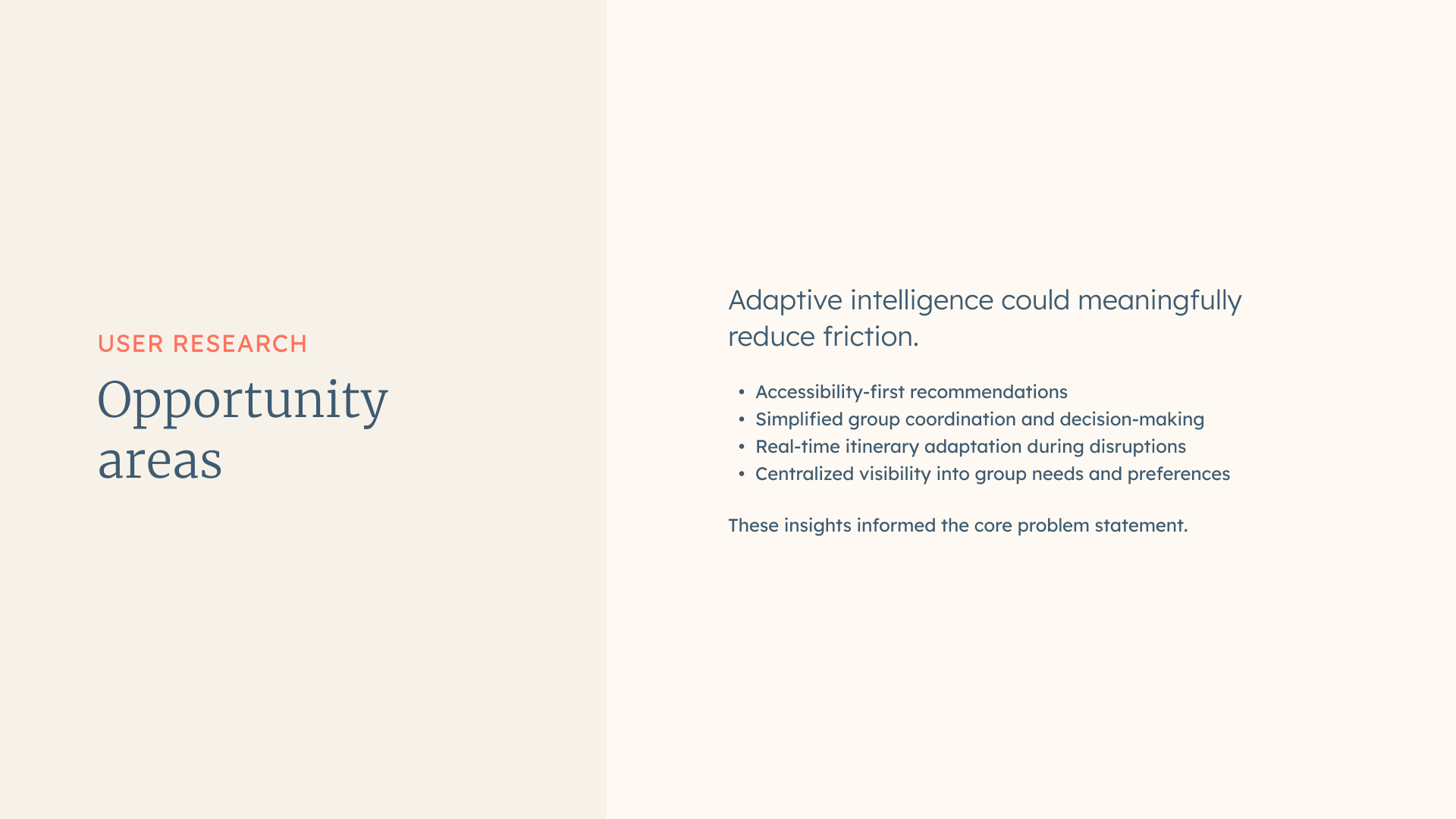
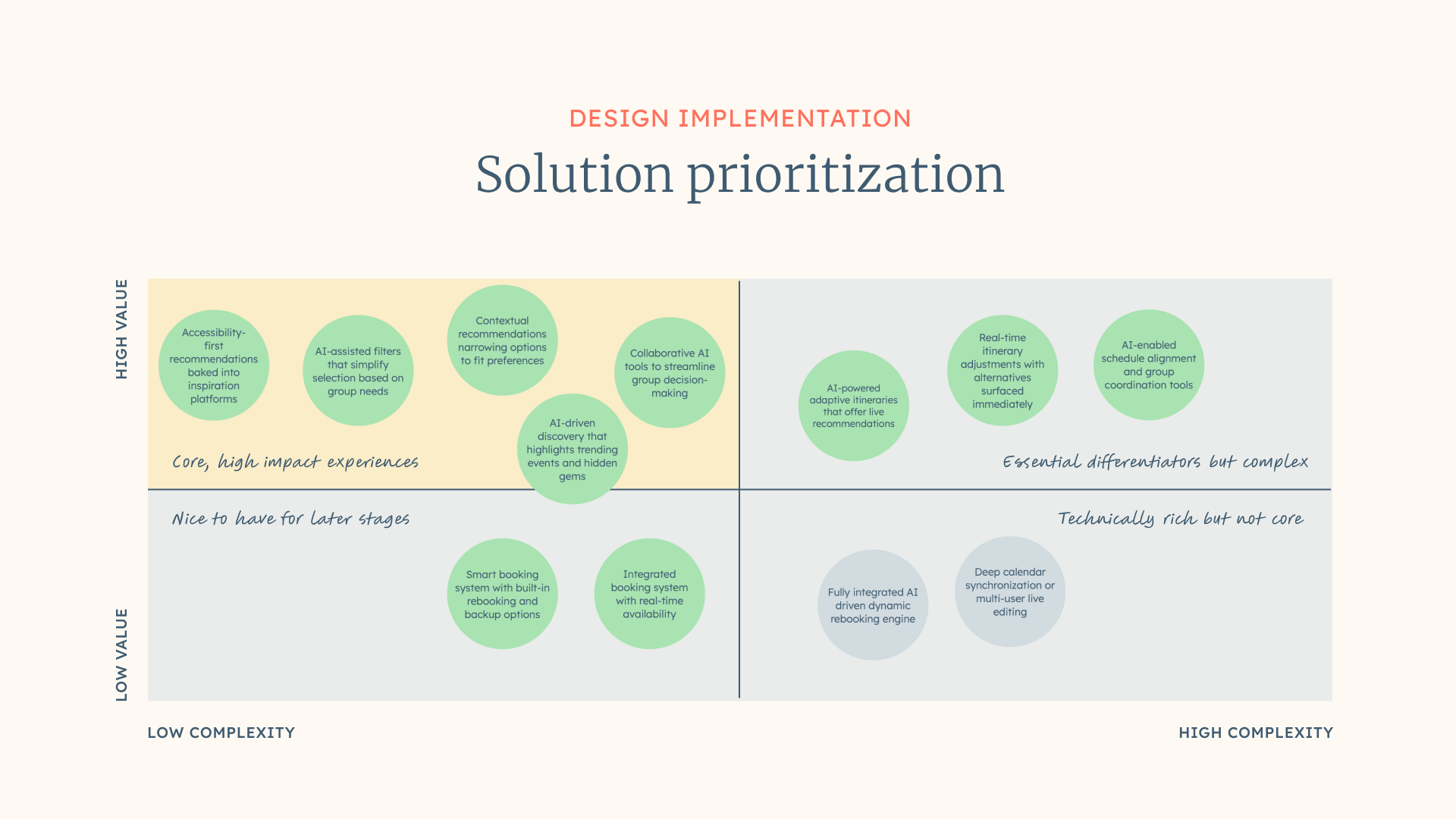
Synthesizing survey data, interviews, and usability testing revealed clear opportunity clusters where adaptive intelligence could deliver meaningful value. These included accessibility-first recommendations, simplified group coordination, and real-time itinerary adaptation.

These insights informed the core problem statement:

Problem statement
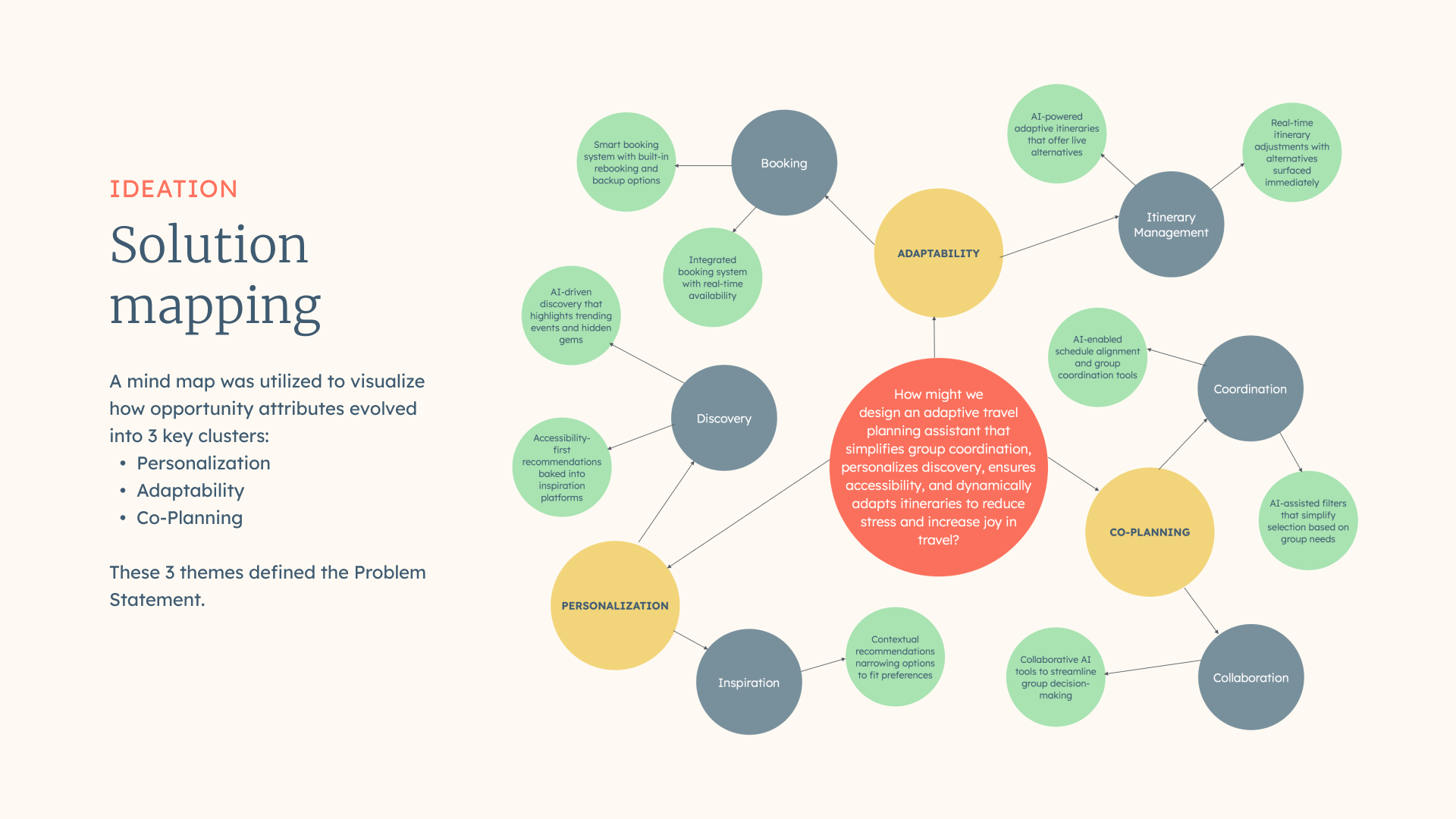
How might we design an adaptive travel planning assistant that simplifies group coordination, personalizes discovery, ensures accessibility, and dynamically adapts itineraries to reduce stress and increase joy?


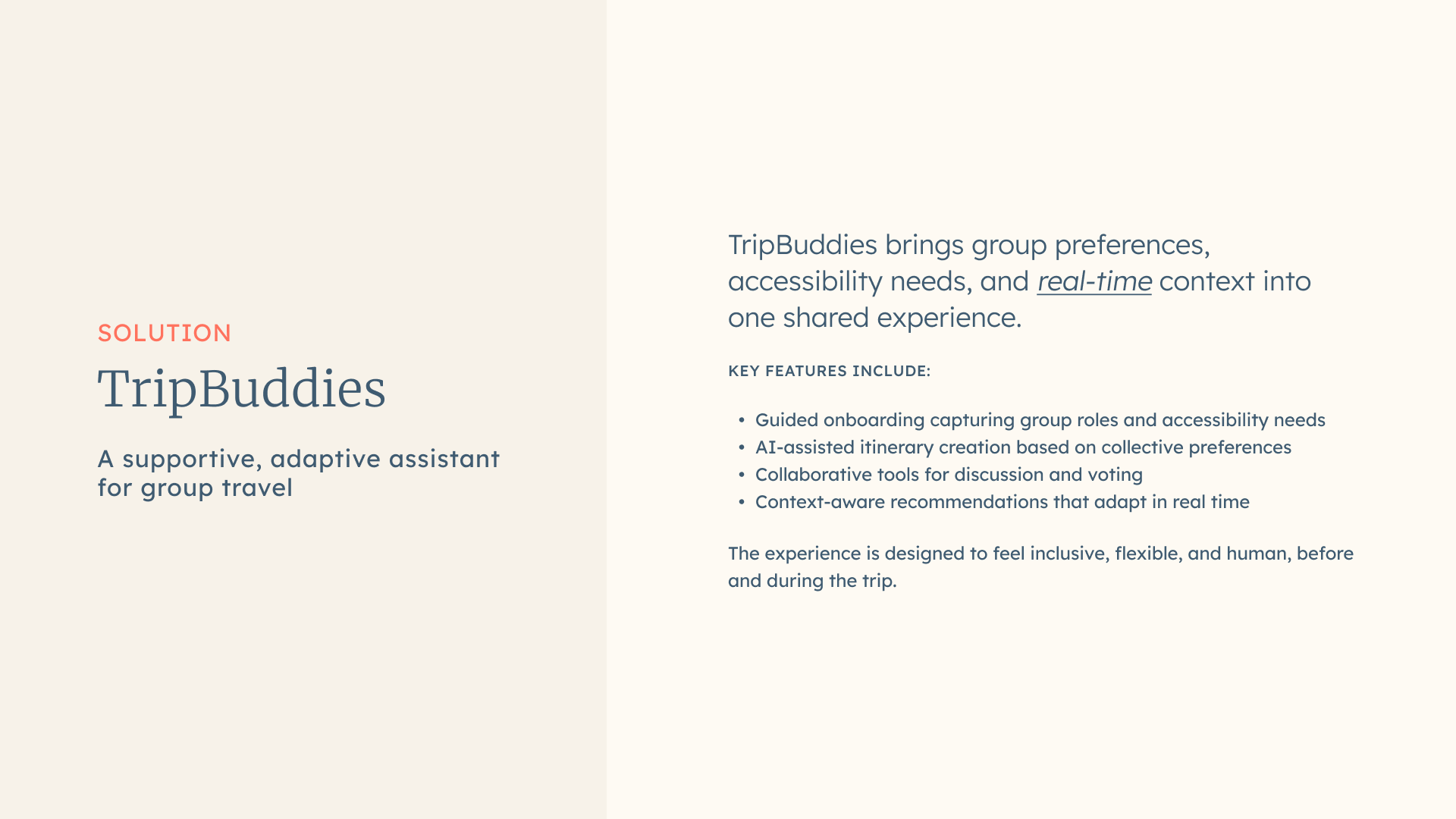
Solution: TripBuddies

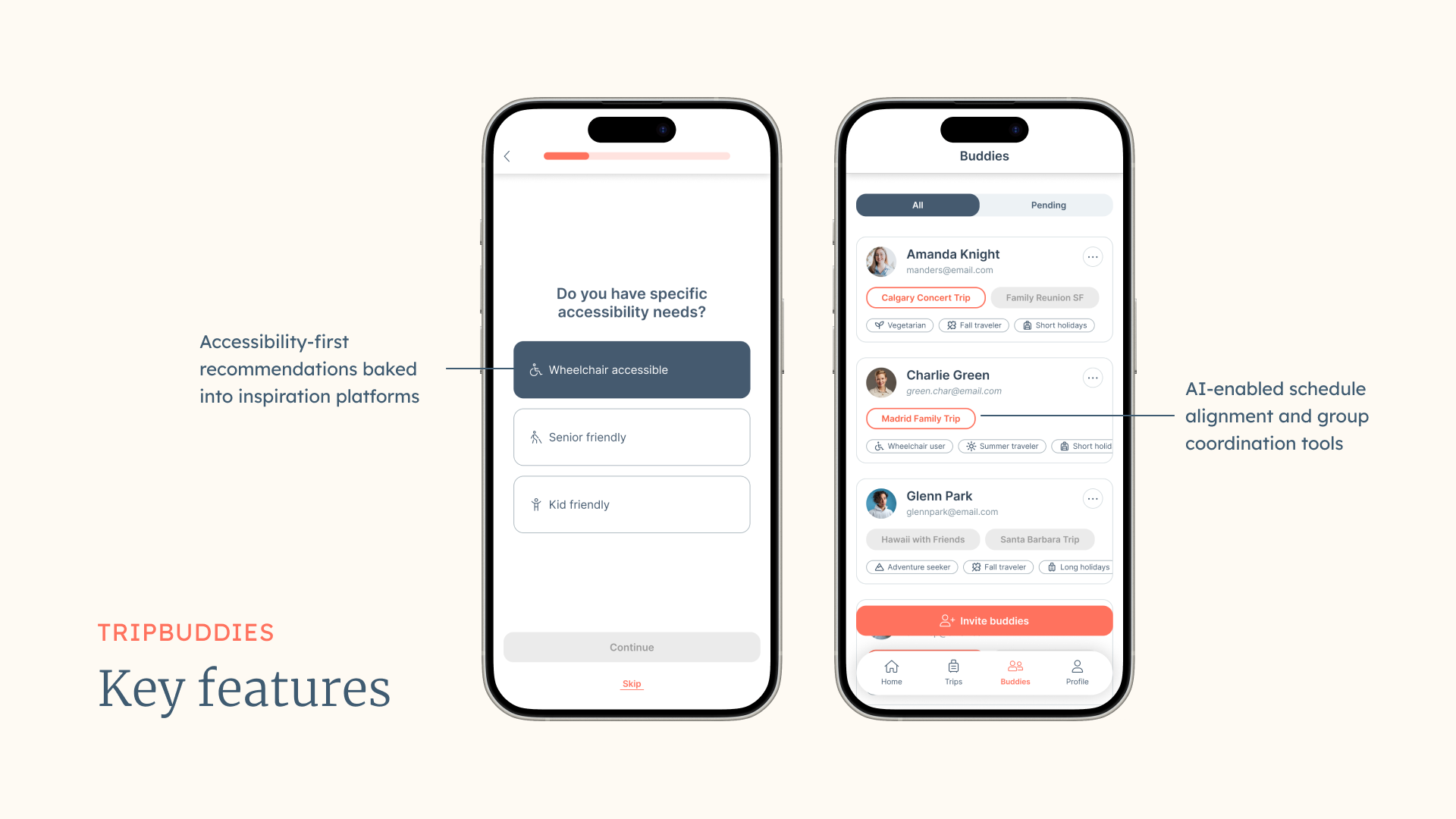
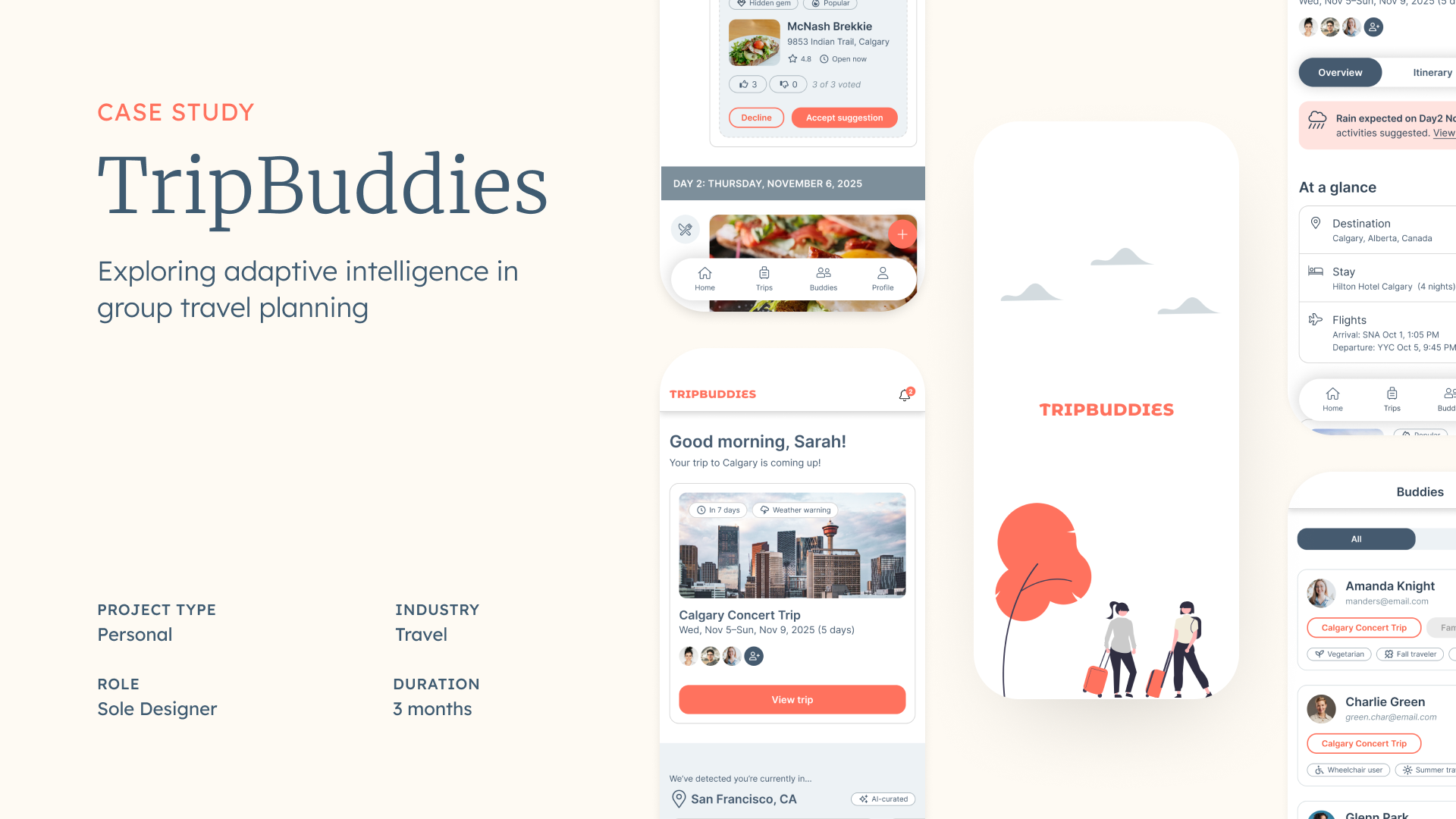
TripBuddies brings group preferences, accessibility needs, and real-time context into one adaptive experience. The platform offers:

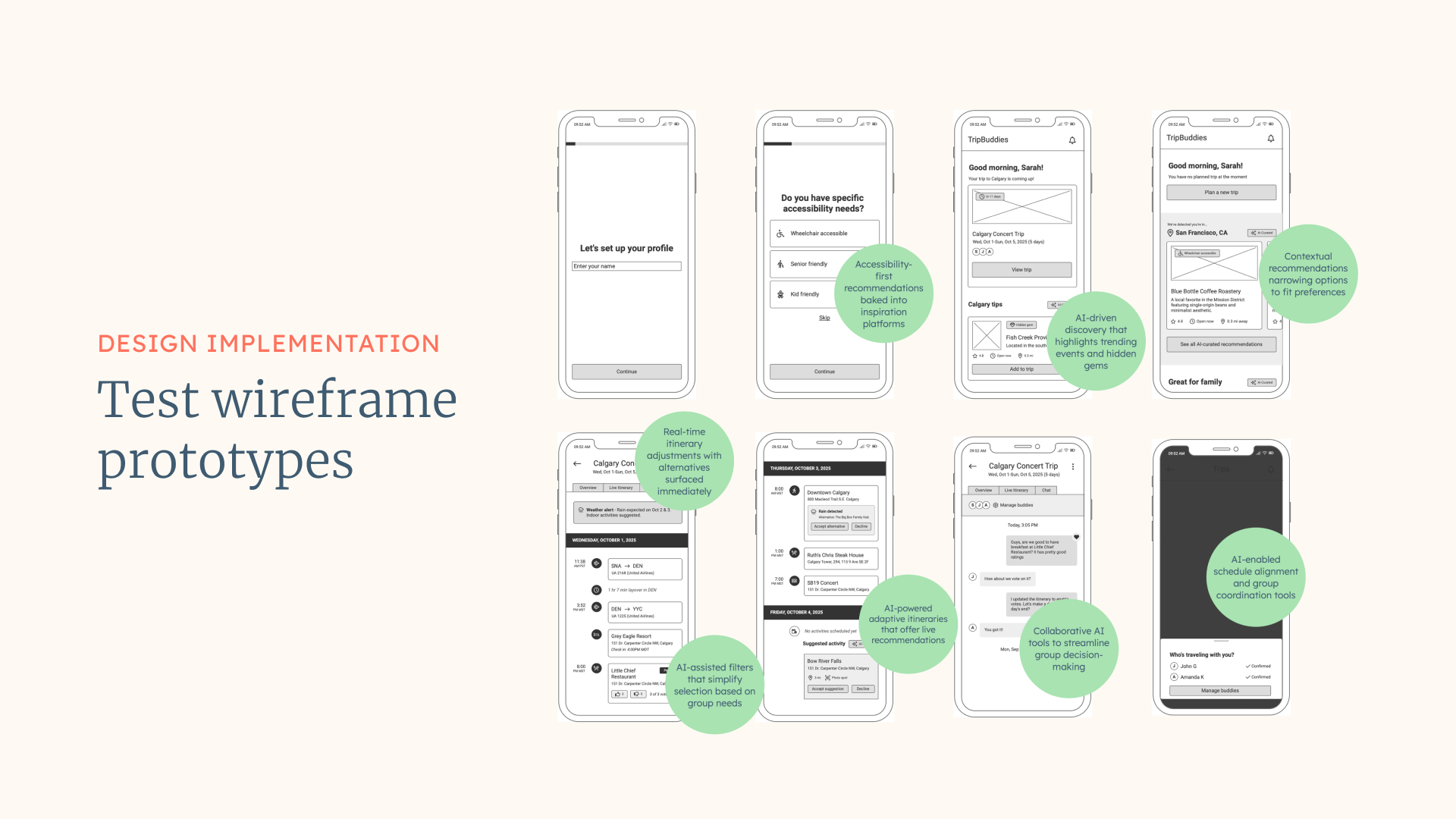
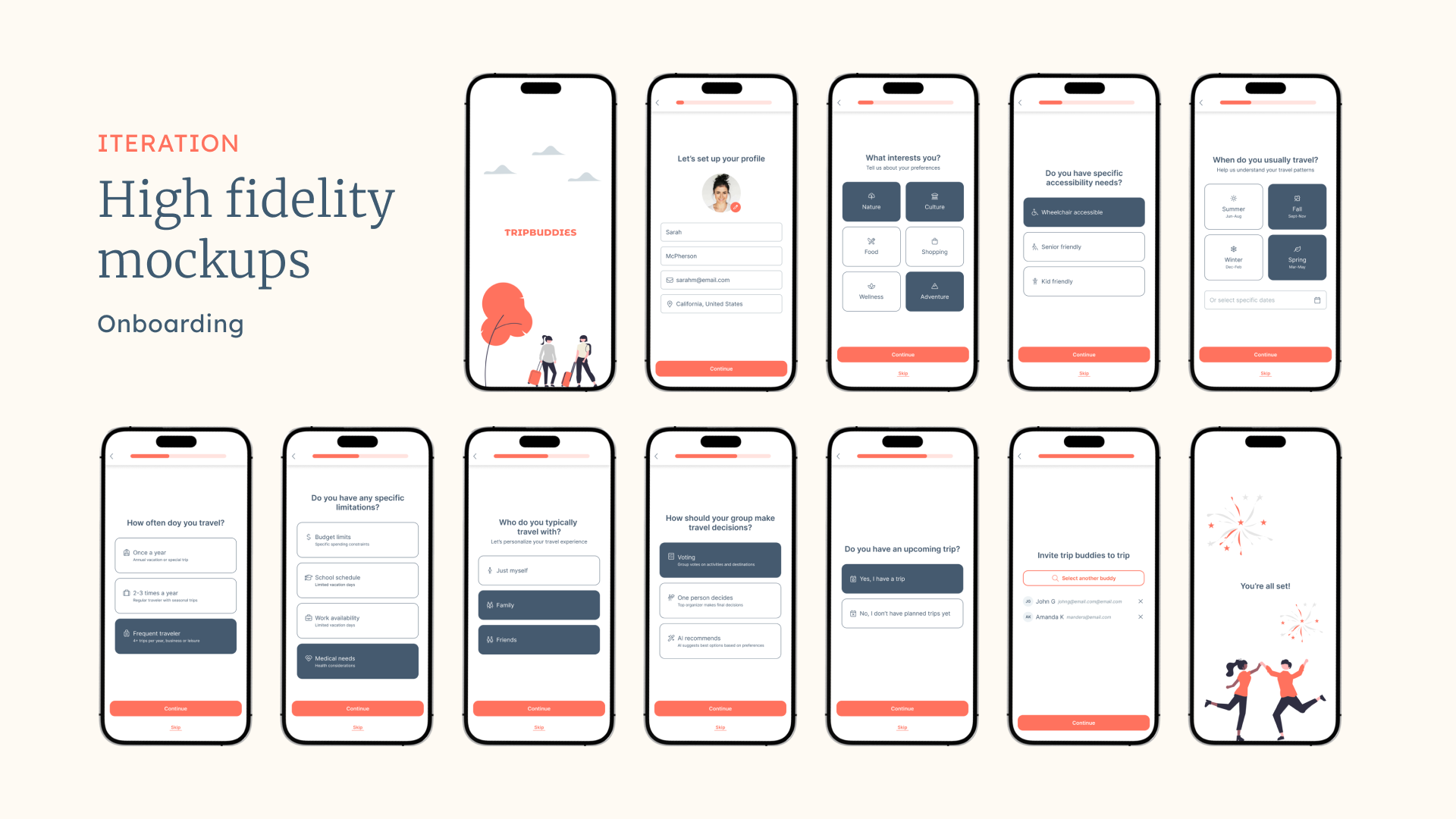
  • Guided onboarding with group and accessibility inputs
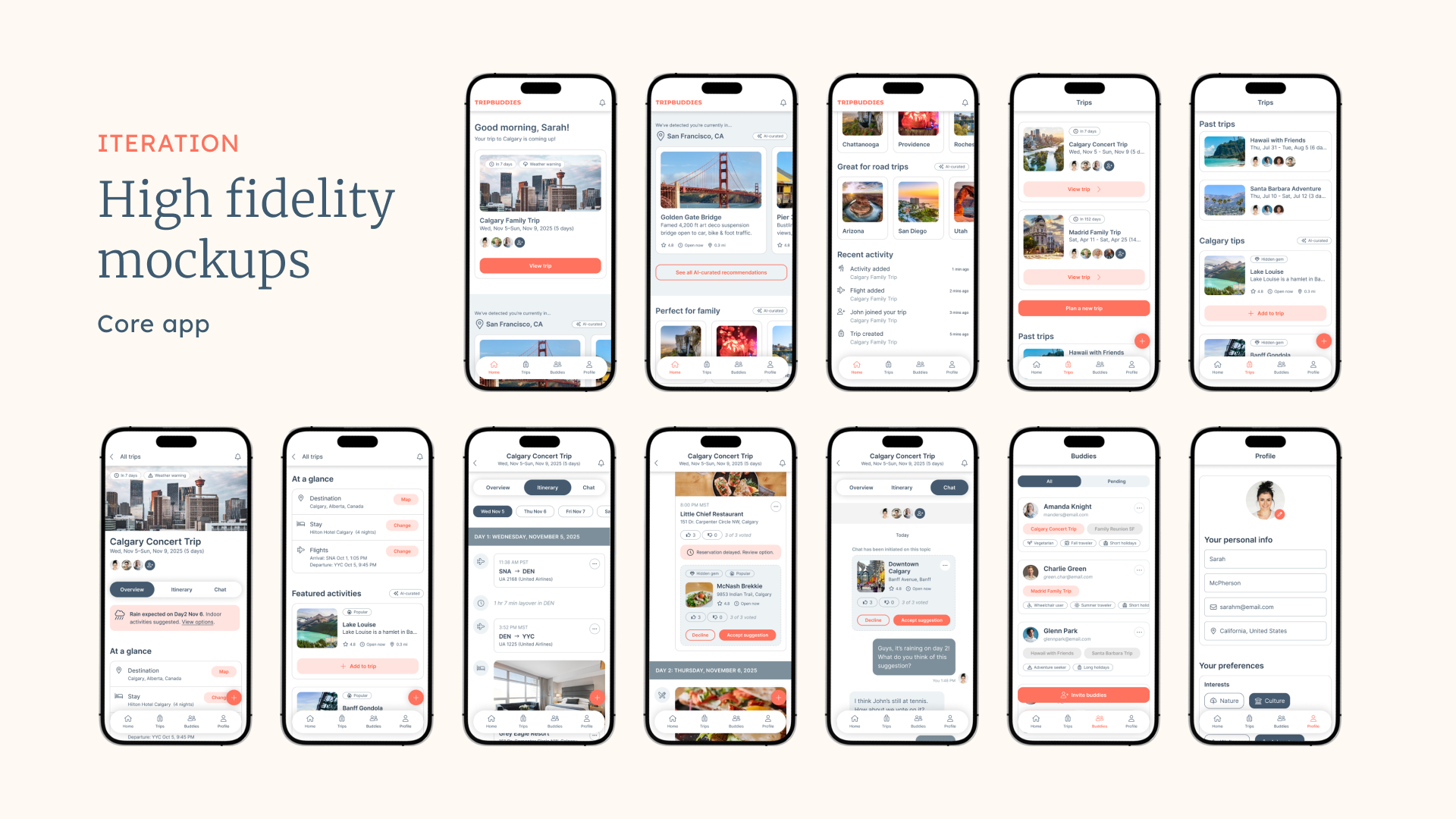
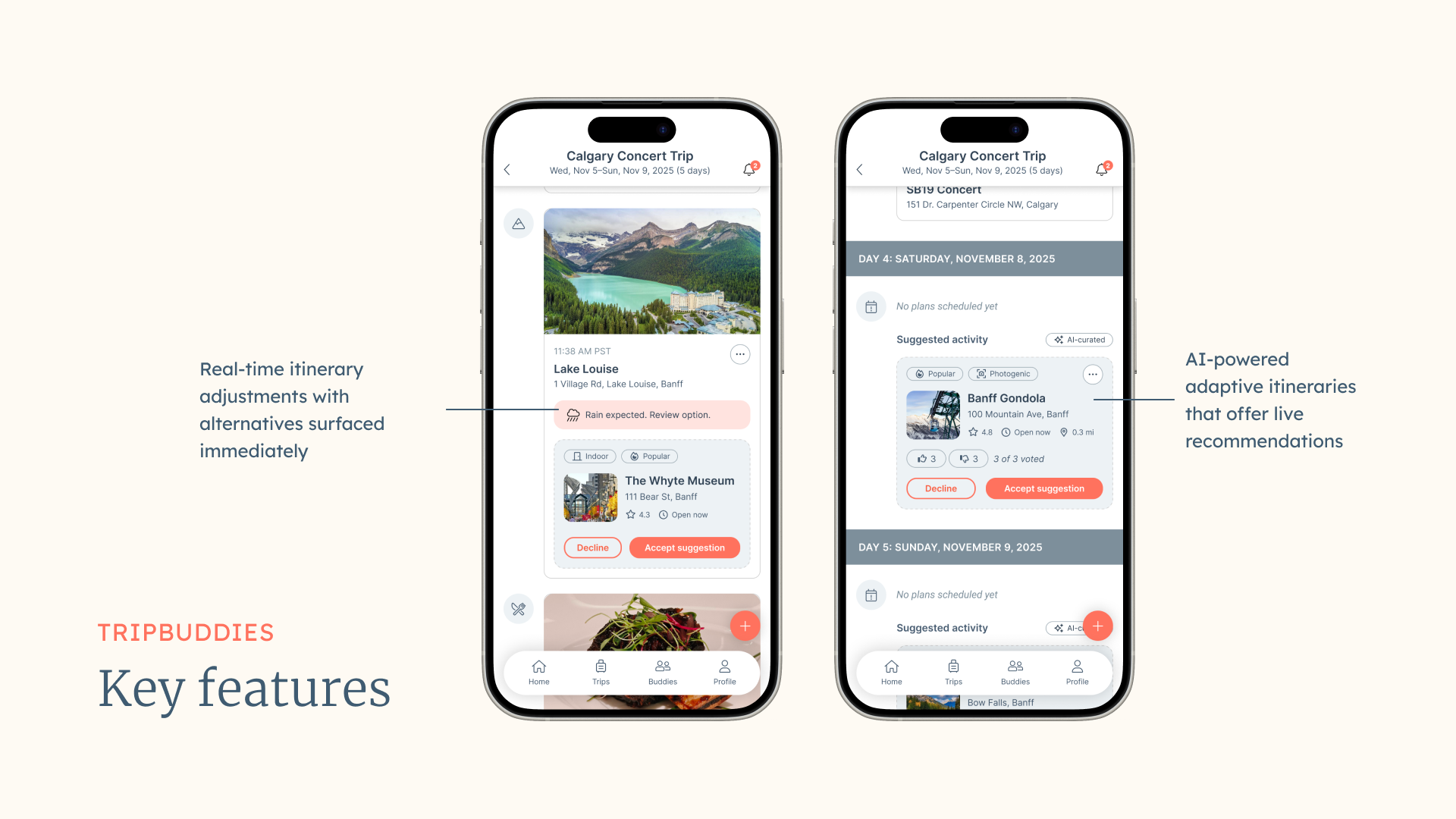
  • AI-assisted itinerary creation
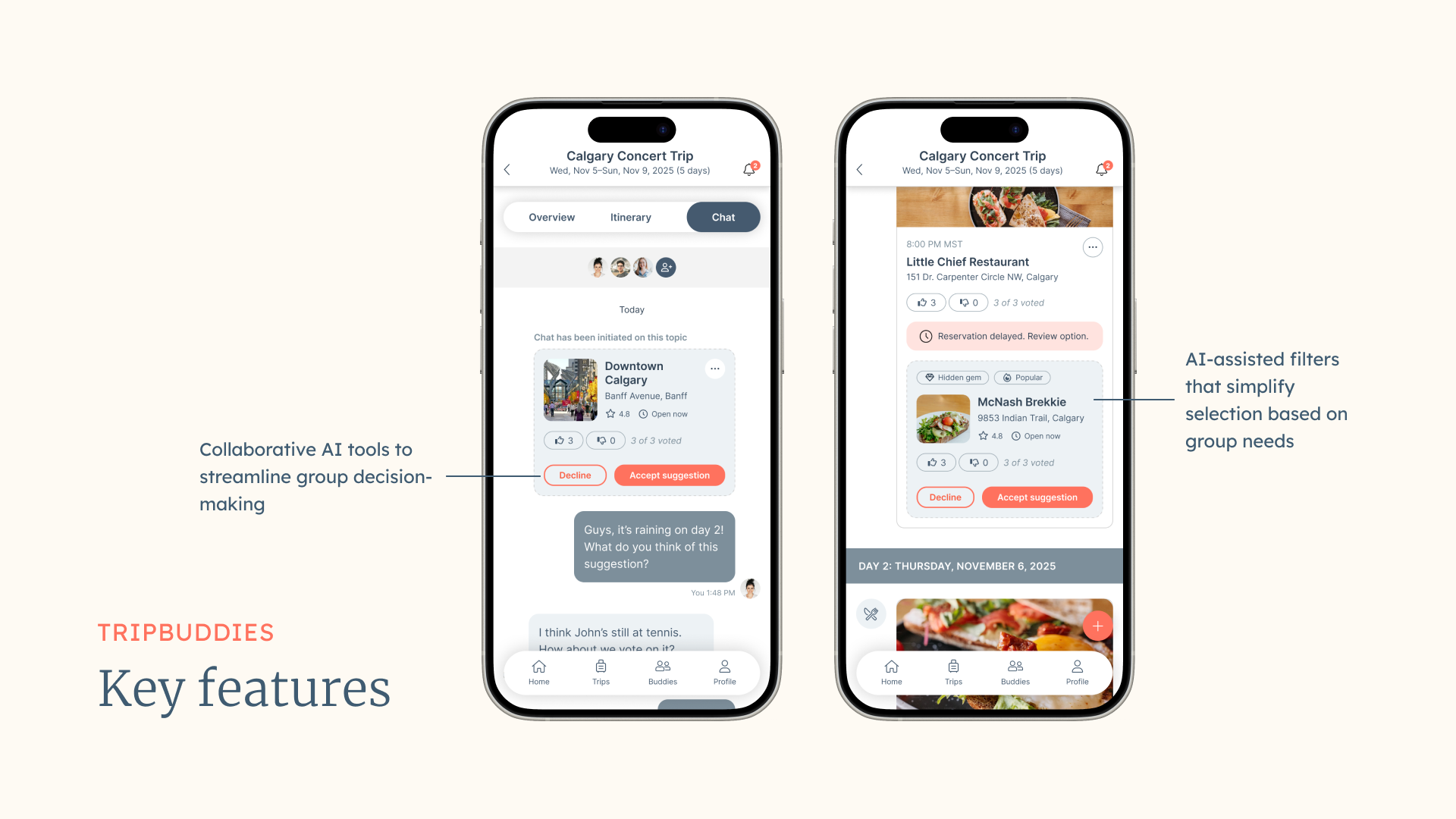
  • Collaborative tools for discussion and voting
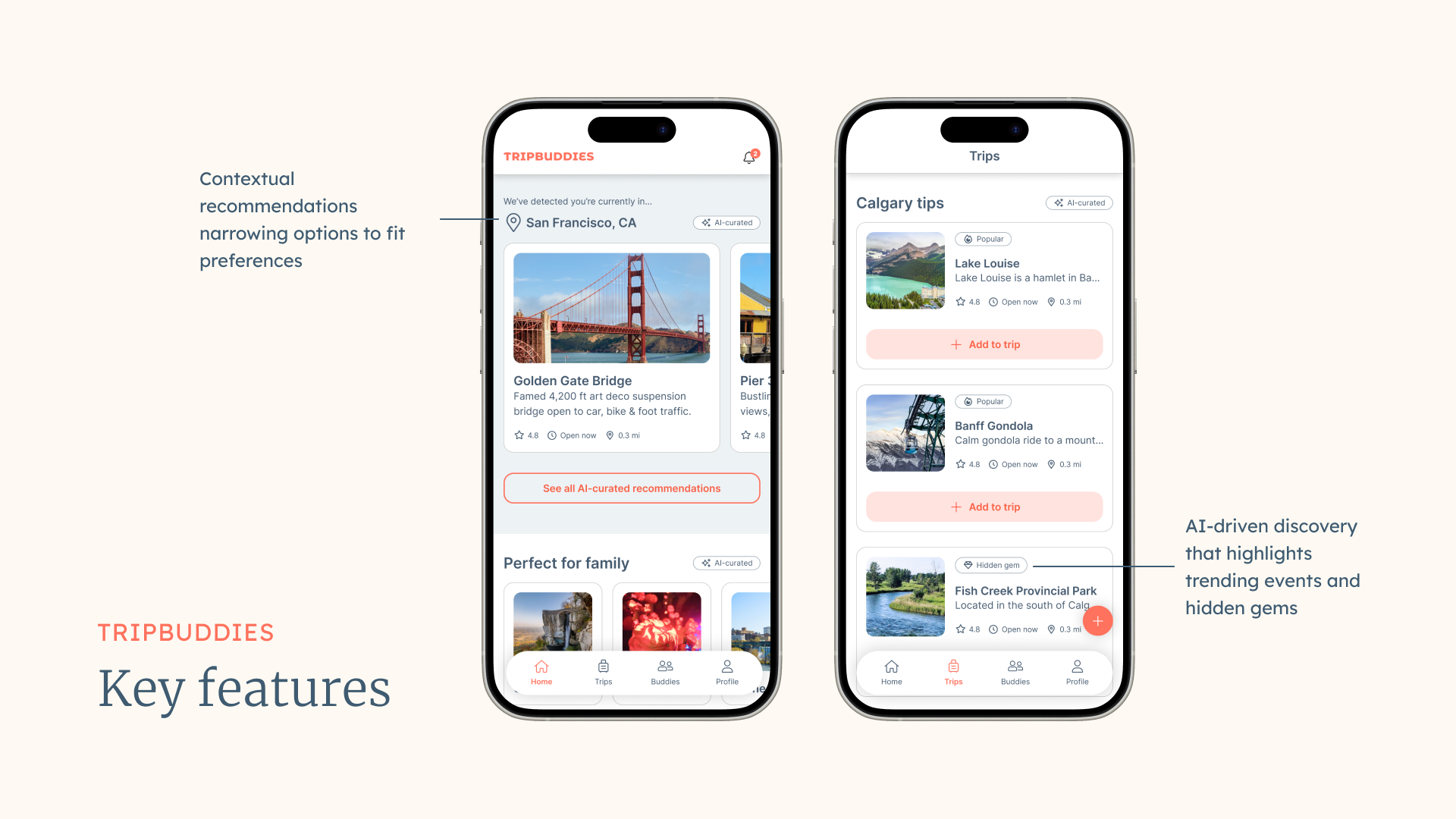
  • Context-aware recommendations that adapt to change

The experience is designed to feel supportive, inclusive, and flexible—before and during the trip.


Results & business impact

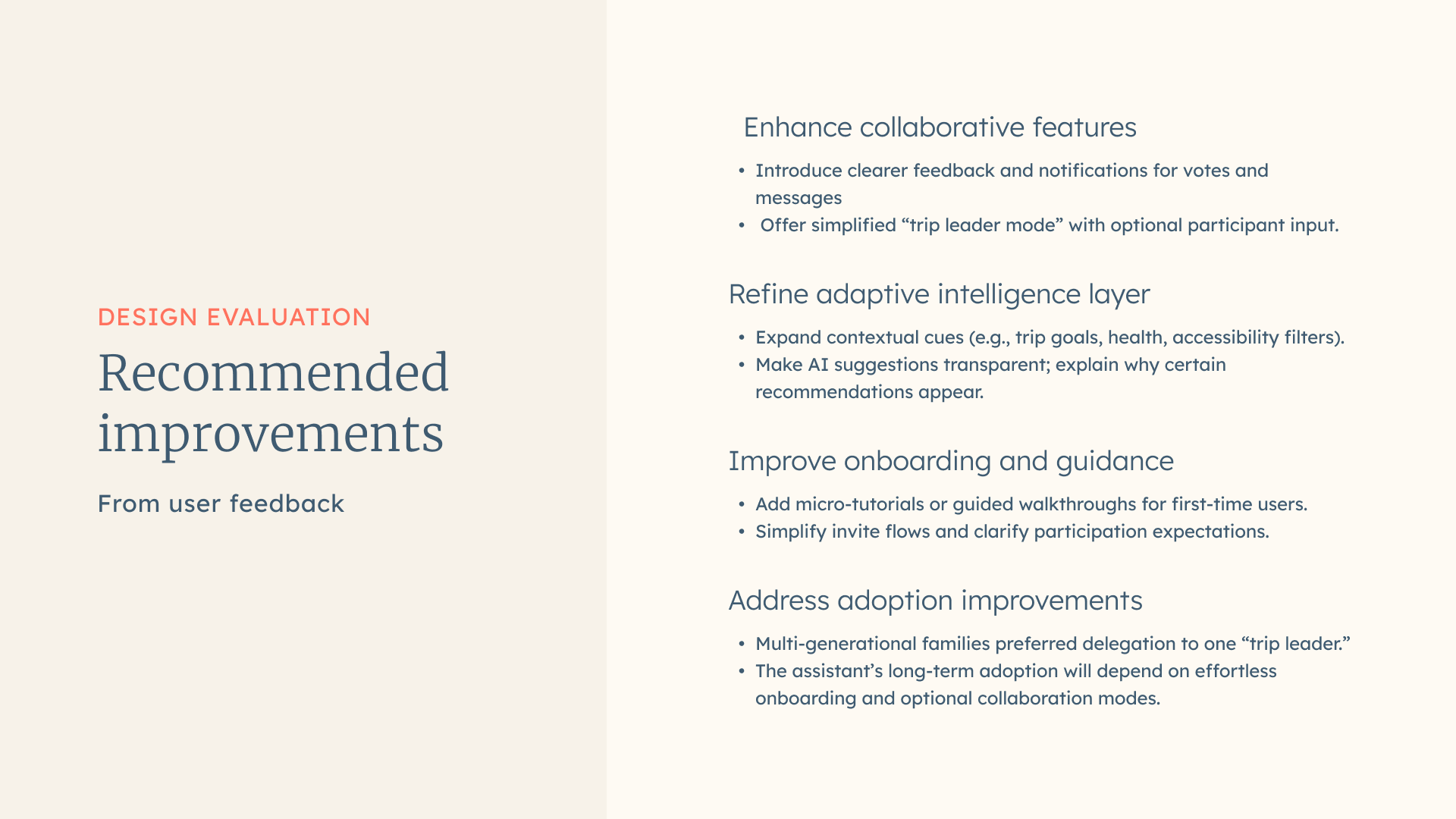
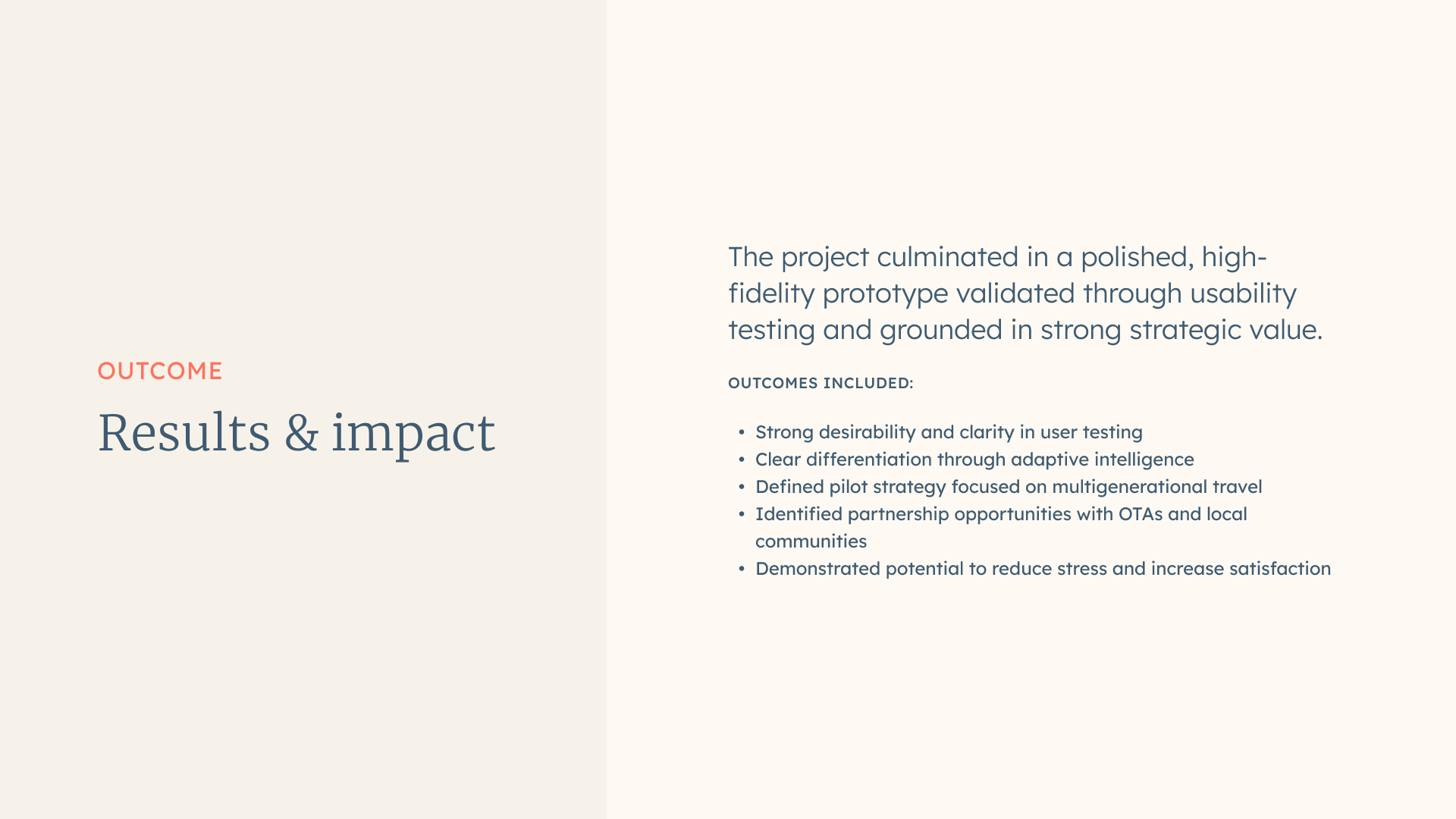
The project resulted in a polished high-fidelity prototype, validated through usability testing and grounded in clear strategic value. It demonstrated a viable path toward an inclusive, adaptive travel product with strong market relevance.

Outcomes and impact include:

  • Strong desirability and clarity confirmed in user testing
  • Distinct competitive positioning through adaptive intelligence
  • Defined pilot strategy focused on multigenerational travel
  • Opportunities for partnerships with OTAs and local communities
  • Clear potential to reduce stress, improve satisfaction, and support sustainable travel


Strategic lessons
Reflecting on the process reinforced key lessons about designing for complexity. Narrowing to the right core user accelerated clarity, accessibility improvements benefited all travelers, and adaptive systems were most effective when the intelligence felt supportive rather than directive.